What Is Child-Led Learning? A Humboldt County Parent's Guide
Philosophy · Growing With Nature School, McKinleyville, CA
Child-led learning is often misread as 'no learning happens.' In practice it is the opposite: the adult's job gets harder, because we follow a real child's real curiosity instead of a worksheet. Here is what that looks like in a McKinleyville yard.
The short definition
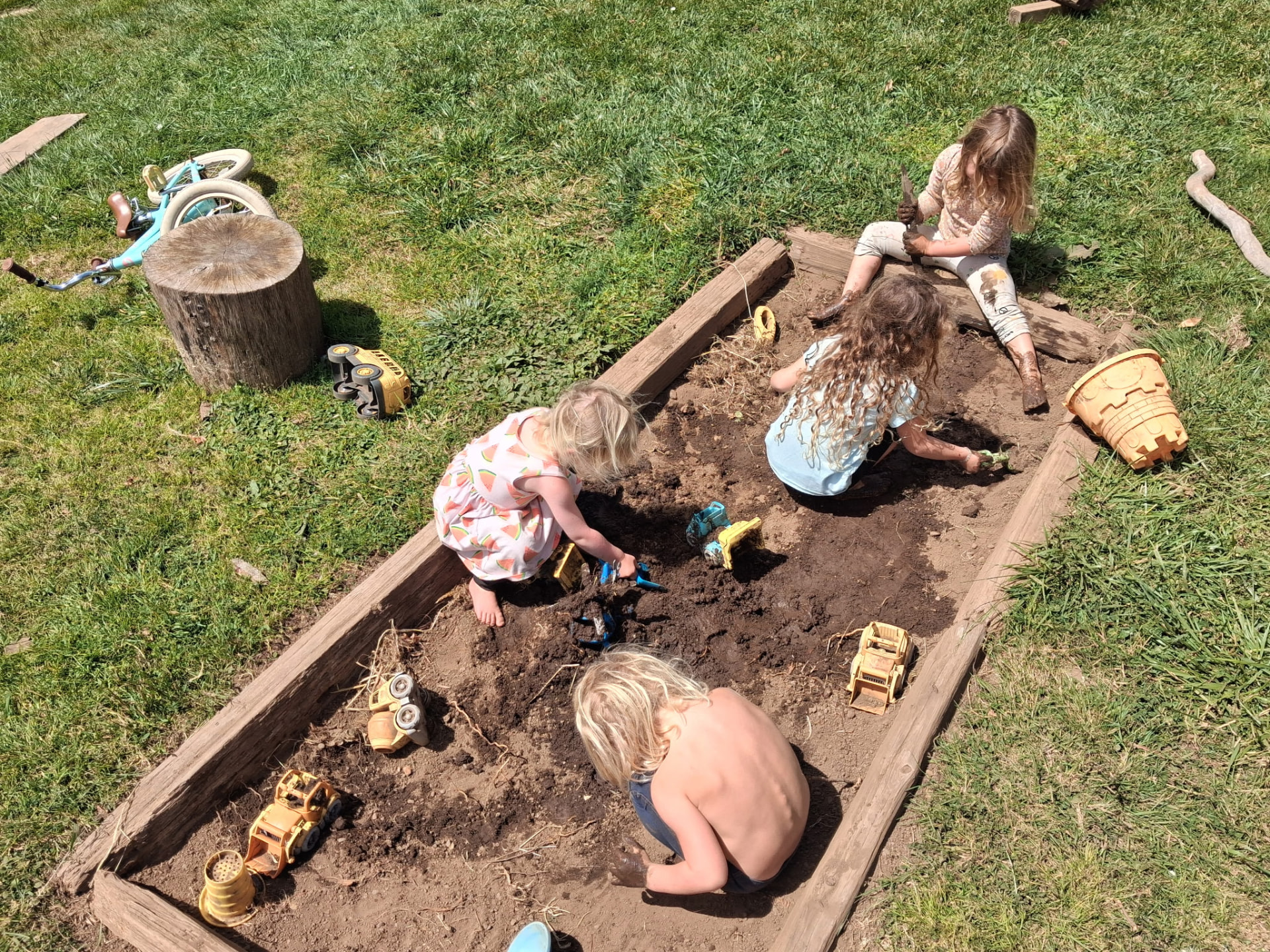
Child-led learning means the child chooses the direction, and the adult provides the materials, safety, language, and questions that deepen it. We do not cancel structure — we keep a predictable daily rhythm — but within that rhythm, the content of the day comes from the children.
What it looks like on a Tuesday
A child finds a wild plum on the fence line. Within twenty minutes that has become: counting plums, arguing about fair shares (early fractions), drawing the branch, asking why this tree has fruit and the cedar does not, and a story about the birds that got there first. Nobody announced a math lesson. The math happened because the question was real.
- Literacy grows through storytelling, dictation, and labeling discoveries.
- Math grows through measuring, sorting, sharing, and building.
- Science grows through hypothesis and mud — repeatedly.
- Executive function grows because the child is the one holding the plan.
The adult's role: not passive
Following a child is not the same as ignoring one. We are narrating, naming feelings, offering a tool at the right moment, and staying quiet at the right moment. When conflict comes up, we treat it as the curriculum rather than an interruption — the same zero-judgment, emotionally validating approach described across our four philosophy pillars.
Does it prepare kids for school?
Children who direct their own learning arrive at formal academics with intact motivation, strong language, and the ability to tolerate not knowing something yet. Most of the parents we meet across Arcata, Trinidad, and Eureka are not worried their child can memorize — they are worried their child will stop wanting to. Child-led, play-based education protects that appetite.
Related reading
Practical next steps: our Humboldt rain gear guide for outdoor school covers what to wear so a child can actually stay outside and follow their curiosity, and the parent FAQ answers the questions we hear most. When you are ready, the parent questionnaire is how we start the conversation.
Wondering if we’re the right fit?
Our parent questionnaire is the best first step for families in McKinleyville, Arcata, Trinidad, and Eureka.
Start Parent Questionnaire